
YouTube | Webstore | Patreon | Twitter | Tip Jar | Linux 101 | AAR List | Parade 2025 Video
Parade 2025 AAR
Goals for 2025
| Goal | Pass | Fail |
|---|---|---|
| Move registration data over RF | x | |
| Create APRS objects for key points | x | |
| Track all personel/assets using APRS | x | |
| Track lead and tail of parade using APRS | x | |
| Test Meshtastic reliability with parade volunteers (new for 2025) | x | |
| Test Meshtastic reliability back to the house (new for 2025) | x | |
| Track key events on ICS214 (new for 2025) | x | |
| Share APRS data with command over network (new for 2025) | x | |
| Do everything offline | x | |
| Do everything with emergency power | x |
Weather
It was a cool 17°F to start the morning and the wind chill was hovering just above 0°F. The saving grace was wall to wall sunshine throughout the day.
Due to the colder than normal weather all radio equipment and batteries were kept in the house overnight and loaded into the RV the day of the event.
Coffee Station
The Oupes Exodus 2400 was utilized to power a Keurig coffee maker. The power station had plenty of power to provide coffee to anyone in the group who wanted a cup. The only issue we ran into was the water freezing in the Keurig reservoir.
RV
The RV provided a space for my workstation and served as a warming spot for all volunteers. In addition, it provided a place to keep lunch out of the weather until it was served. By this point in the year the RV is winterized so no running water or facilities are available. Two cases of bottled water were taken for the coffee maker and lunch.
RV Power
- 96% Start of Day
- 84% End of Day.
Note the drop in rating for a LiFePO4 battery in cold temps. The capacity could be reduced by 25% or more. Factoring on the high side for a 40% loss, the RV's 314Ah battery should still have the capability of delivering ~190Ah.
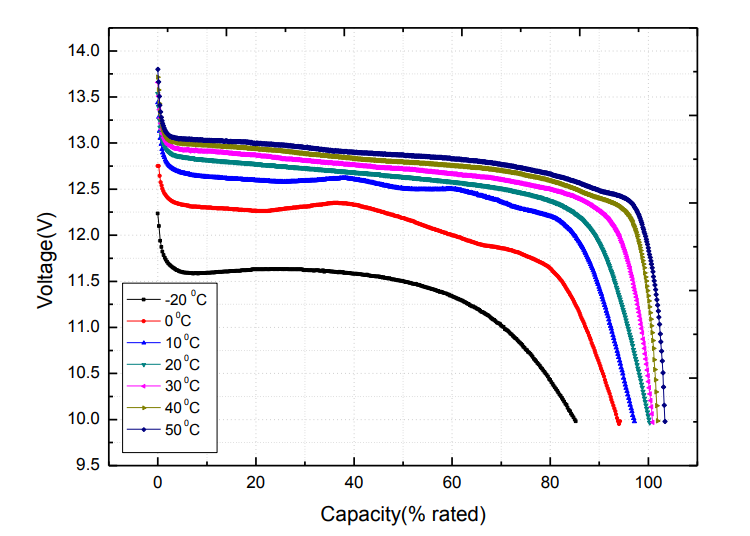
The RV was powered stictly with battery/solar power. However, the solar panels could not charge the 314Ah battery on board. This is due to the cold temp charge protection provided by the battery's BMS. The battery was checked the day before the parade and found to be at 100%. The RV was connected to the truck and shore power was removed at 1530L. The battery showed 96% remaining the morning of the event and had 84% at the end of the day. The battery measurement were taken with the Victron Bluetooth shunt. The lights inside the RV were run the entire day. All of the radios, the computer, and the second monitor were powered by the RV's 314Ah battery. The RV's 1000W inverter was used to power the Starlink Mini. Considering the battery was at 84% at the end of the day, we used ~50Ah powering everything all day.
Computer
73Linux was running on the X1 Carbon which had a travel monitor attached. Having a dual screen setup made it much easier to keep track of everything. Applications used during the event included FLDIGI, FLAMP, and YAAC. While FLDIGI will run fine on a single monitor, YAAC almost requires a dual screen setup. This is due to the fact that not only do you need the primary map, you also need multiple other windows (messages, bulletins, individual tracking maps, etc) open to keep track of everything going on.
The Icom 705 was connected via a single USB cable to the X1. The 705 was used with FLDIGI and provided GPS for the station. The D74 was connected via Bluetooth and used with YAAC.
I initially connected the N37 via Bluetooth to the laptop and planned to use Meshsense with the node. However, I discovered that connecting both the Meshtastic device and the D74 over Bluetooth presented an issue. Once Meshsense was open and conneceted to the N37, the D74 would no longer transmit with YAAC. I disconnected the N37 and closed Meshsense which solved the issue. Need to investigate¹
A 10 second webserver was deployed on the X1 so parade command could download the CSV spreadsheet received from registration. See network section below
Radios
- Icom 705 for FLDIGI (via USB)
- Kenwood D74 for YAAC (via Bluetooth)
- Kenwood D75 on person
- Icom ID50 on person
- WisMesh Tag on person
- N37
Antennas
- N9TAX jpole for fldigi
- Ed Fong jpole (for voice comms to registation)
- TN07 Green Mast on back of RV to support both antennas
Registration/FLDIGI
Registration data is collected about a mile from the primary command location. The registration data is entered into a CSV spreadsheet which in turn is transmitted over RF. To accomplish the transfer of the CSV doc, we use FLAMP in combination with FLDIGI. The mode used is BPSK500 and the transfer happens on 2M simplex. FLAMP is chosen because it gives us a way to positively verify that the CSV was received without errors. If any blocks are missed during the transmit cycle, FLAMP also allows the receiving station to report any missing blocks. The missing blocks can be retransmitted without having to transmit the entire data set again.
We ended up doing 5 or 6 data transfers between registration and myself. Out of all of those, we only missed one single block the entire day. Some of the data transfers contained as many as 70 blocks.
Meshtastic
A small Meshtastic node in client mode was deployed on the same mast as the voice repeater and the APRS digipeater. This node only had a 3000mAh battery but lasted the entire day and had 65% battery remaining at the end. This is the homebrew "repeater" that was built just prior to Field Day 2025
I ran the WisMesh Tag on my person and planned to run the Meshology N37 connected via Bluetooth to the laptop.
The node running in my truck was specifically turned off so that it wouldn't interfere with the results of the Meshtastic test during the day.
There was no specific role for Meshtastic. We only used the parade as a real world event to test the reliability. We asked that anyone who had a node to bring it. During the initial parade brief held earlier this month, we added a club channel to everyone's node. This allowed us to have a private channel specific to the club. We also turned on precise location sharing for the club channel.
In addition to testing for reliability with other parade volunteers, there was also a test to see if reliable comms could be established between our location in the field and my house. The distance between the parking garage where the temp node was placed and my solar node at home is 4.53 miles. The node on the parking garage was roughly 50 feet above ground level and the solar node at home is elevated 35 feet.
Communication with other members located less than 1/2 mile away proved reliable. However, I could not communicate with registration, roughly a mile from our location, over Meshtastic. I also never got a successful message passed back to the house. We were able to successfully pass APRS messages back and forth to registration.
APRS Digipeater
The digipeater was changed this year to the Kenwood D72 HT and was powered by a Miady 8Ah battery. Both were housed in the same plastic ammo can from previous years and an Ed Fong jpole antenna was used with this setup. This provided a much simpler setup than what I have used in the past. The APRS digi was deployed on the same mast as the voice repeater on top of the parking garage. The D72 consumed 2.29Ah out of the Miady battery. This proved to be a successful setup.
APRS Trackers
We utilized two APRS radios to track the parade. One (FT2) was placed one the Grand Marshal and the other (UV-Pro) on the Santa float which is the last float to run. Both were set to auto beacon every two minutes. Typically I prefer smart beaconing for all of my APRS radios but this particular case called for using auto beacons at specific time intervals instead.
Neither tracker worked passed Main & N Highland although we were seeing position reports earlier indicating that both radios were configured and transmitting correctly. An educated guess says that there is a dead spot back to the temp digi site after they passed N Highland. We might consider putting the digipeater on the mast at the RV instead next year since it would have line of sight down Main St.
YAAC
A GPX file of the parade route and all of the APRS objects were created in advance and stored on the laptop. This allowed them to be loaded into YAAC the day of the parade.
I had planned to use bulletins to alert everyone when notable events happened. However, it got busy and only one bulletin was posted. The one that was posted was successfully delivered to everyone that I checked with and was reported on aprs.fi.
YAAC was also used to track individual operators and we attemtped to track progress of the parade. (see trackers above)
YAAC was also used for all APRS messages sent from my station.
ICS 214 Log
The ICS 214 fillable PDF was downloaded in advance. We used to 214 to track notable events as the day progressed. This took precedence over APRS bulletins although in hindsight, it would have been easy enough to copy the data entered and pasted it into the bulletin screen in YAAC.
Note: Winlink allows you to import 214 data from a spreadsheet. I find it easier to keep on a spreadsheet and import the data to the 214 in Winlink.
Network
The original plan was to create a WiFi network that myself and the command trailer could both connect to. However, the command trailer was too far away from the RV and command could not see my WiFi. While there is an external WiFi antenna on the RV, command was relying on the built in WiFi cards on laptops. This might be solved with an external travel router on top of the command trailer that could be bridged to the RV WiFi? Another option might be to place a travel router half way between the two?
Winlink
Winlink was used on my side to send the CSV files to command after we discovered that command could not connect to my WiFi due to distance between the stations.
Starlink
Starlink was deployed on the RV and connected to the RV's built in router. While the internet was not relied upon for anything parade related, it is a good test of the system. 2.5GB were used through the day with several operators connected to the system.
Misc
During the parade I ran the first test of the Aferiy Nano100. A trigger cable was used to get 12V out of the Nano100 and was used to power the D74 for the entire duration. It was also used to fully charge a Baofeng Mini HT. It performed well for the initial test and there was 65% capacity left at the end of the day.
¹Follow-Up: I am not sure why Meshsense and YAAC didn't appear to working at the same time during the parade. I have had both running after the fact and had no issues with TX on either. I can't replicate what I thought I saw in the field. It's possible that it was a one time glitch or I wasn't seeing what I thought I saw.
Info from KJ6RED who worked registartion:
Registration (and possibly other operators) are a de facto information desk. Specifically, "where is so and so staged"? I am thinking APRS could help, with markers showing various areas (getting as detailed as we want). I would not expect individual float locations, but perhaps large school groups (bands, football, etc)? Again, this may be my lack of experience day dreaming, but I thought I would put that out there. As for floats, a standard of beginning and end placards for each row reported back to registration (or added via aprs) could be useful. (See his full AAR in my gmail "Parade 2025" label)
END OF REPORT
As an Amazon Associate I earn from qualifying purchases
Last Edit - 17DEC2025