Hedgerows 🏡
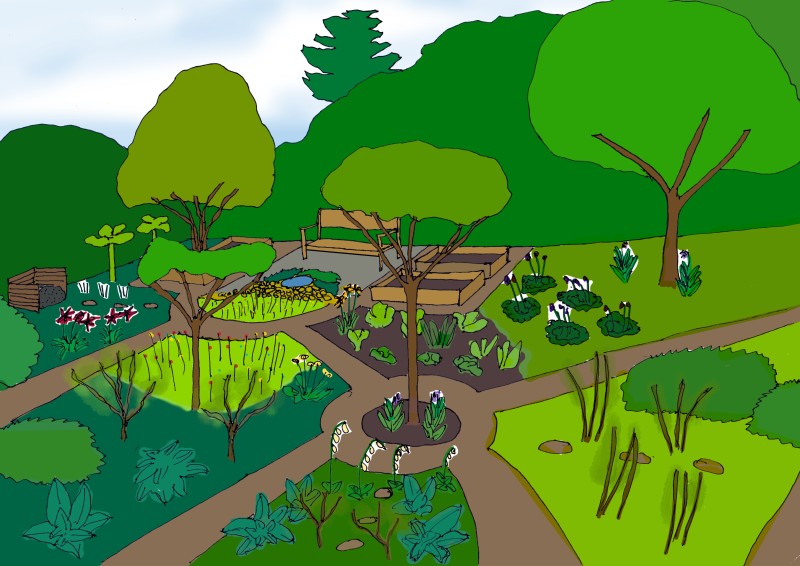
Crude illustration of layout of garden
- Introduction
- Description
- Schedule of Works
- Maintenance
1. Introduction
A productive, low-maintenance village forest garden, with seating and abundant wildlife
Site
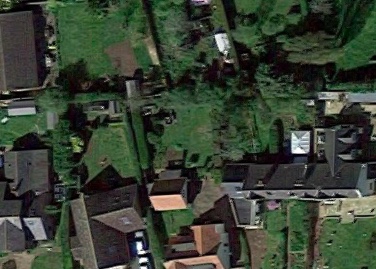
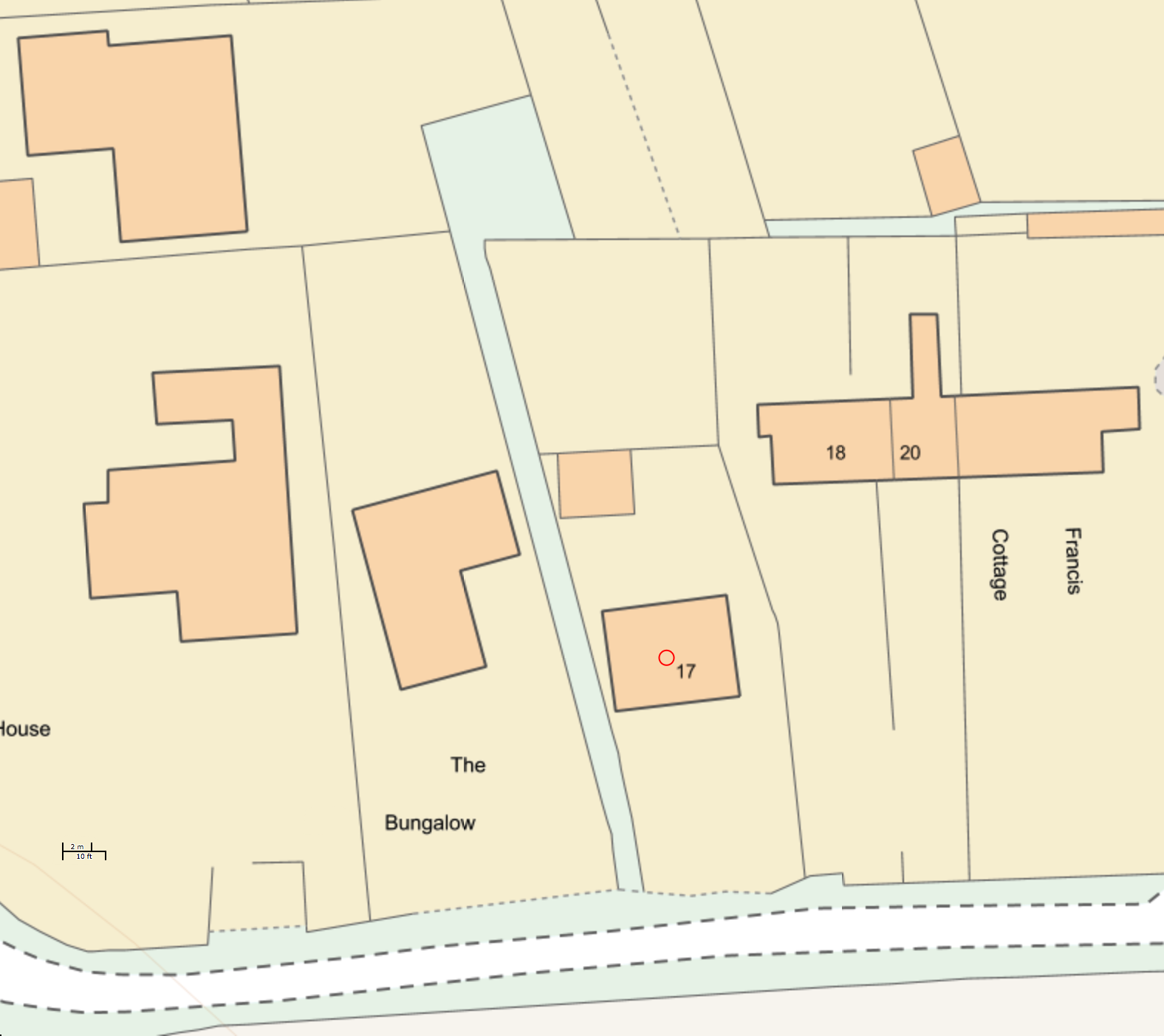
- 16m x 16m approx, south-facing, level, slope down to road from concrete drive.
- Scenic view south past side of house
- Soil: sandy alkaline(?) loam
- Structures: small shed, water butt next to shed
- Access: steep drive then 5 steps
- Situation: private, not overlooked
Files
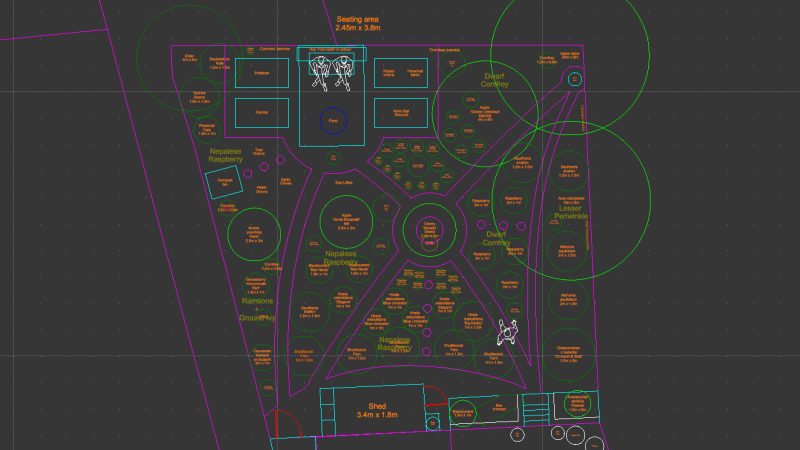
Screenshot of CAD plan
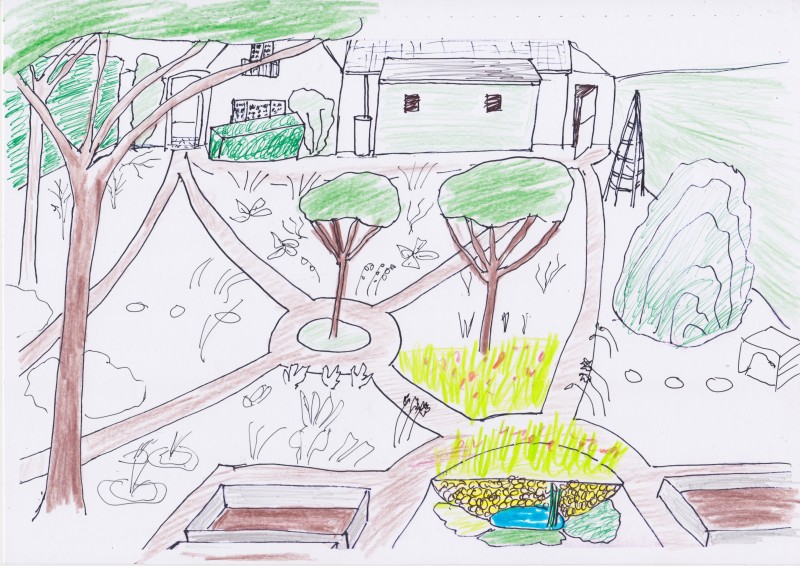
Sketchy sketch of view from the bench
2. Description of design
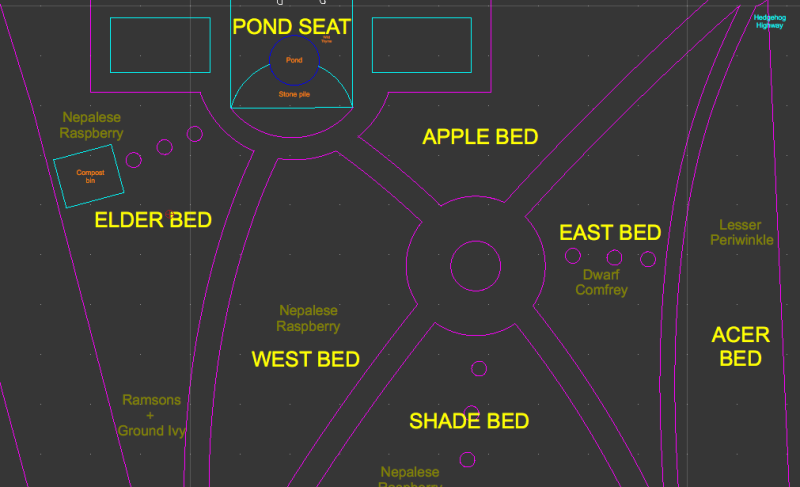
Parterresque path pattern in plan, showing areas
The forest garden is actually quite traditional in design, almost a parterre in the way it’s divided semi-symetrically into 6 by paths, with a dwarf cherry as the focal meeting point.
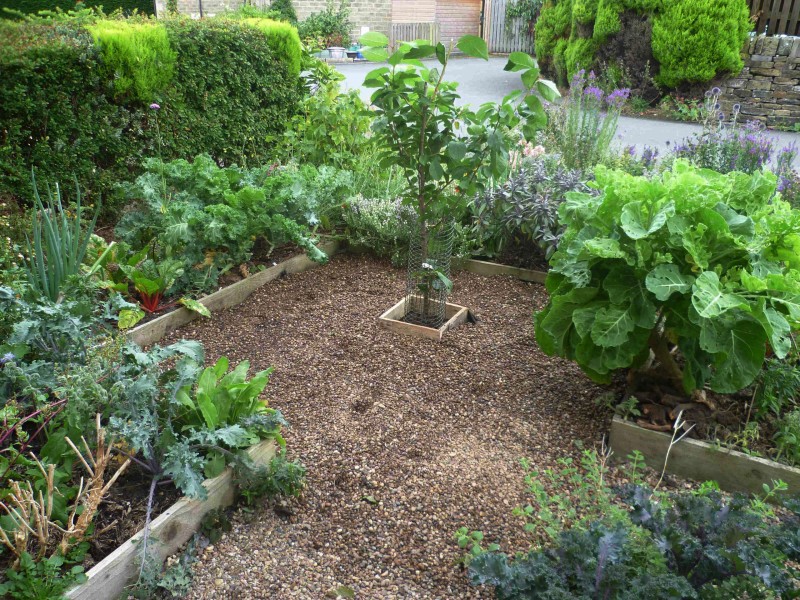 Example of wood chip paths with plank edging
The paths are simple wood chip. If there is an issue with drainage, you could lay foundations. The beds could be edged with 1" thick timber for neatness, although this would be tricky to shape to fit the curves.
The entrance to the garden is flanked by two “standard” (lollipopped) Bay trees in pots, with veg in two large planters, making the most of the south west sun.
There are two additions to the entrance, a beautifully upright (and edible) Amelanchier 'Obelisk' to the right, and a productive & autumnally stunning Rhus aromatica.
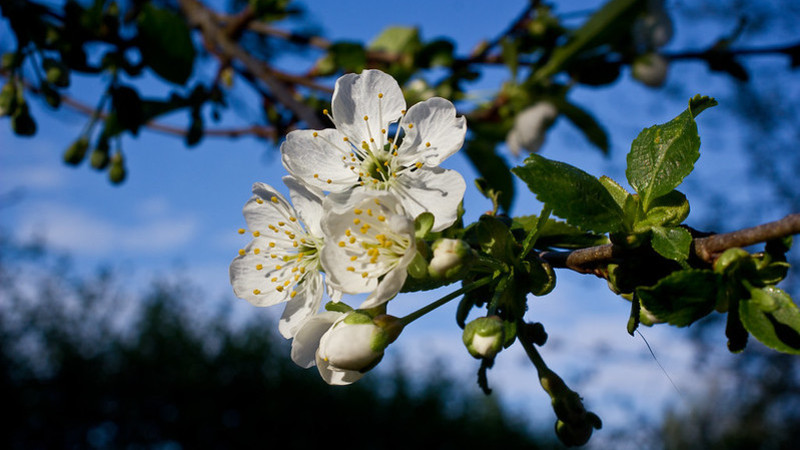 Stunning blossom of Morello Cherry
The main path curves gently toward the seating area, attention is drawn to the very ornamental dwarf Morello Cherry, which copes better with part shade than a sweet cherry.
The Acer Bed on the right has a lovely flowering and edible fruited Japanese Quince, and Oregon Grape beneath the Field Maple. To the left is the Shade Bed, laden with hostas, Shuttlecock Fern and Solomon’s Seal (all the shoots are edible). To the right is the East Bed, the raspberry bed.
Just past the Morello Cherry is the Apple Bed, with a Golden Delicious apple tree with a drift of Columbine, fronted by a bed of leafy perennial vegetables. The Chard comes in some spectacular leaf colours of red, yellow and white. Further to the north eastern corner is a very upright Italian Alder, which can have it’s lower branches pruned in the same manner as the Field Maple. Right in the corner is bird bath, close to the hedges for protection.
The pond seating area is the original gravel rectangle with a small, circular wildlife pond at its head, flanked by 4 raised beds, with a semi-circle of mounded local stones for wildlife habitat, backed by a crescent of fragrant and low-growing Wild Thyme and Creeping Rosemary. Above the seat is a simple wooden arbour, which will provide a support for the dwarf Hop, which has beautiful green flowers and edible shoots.
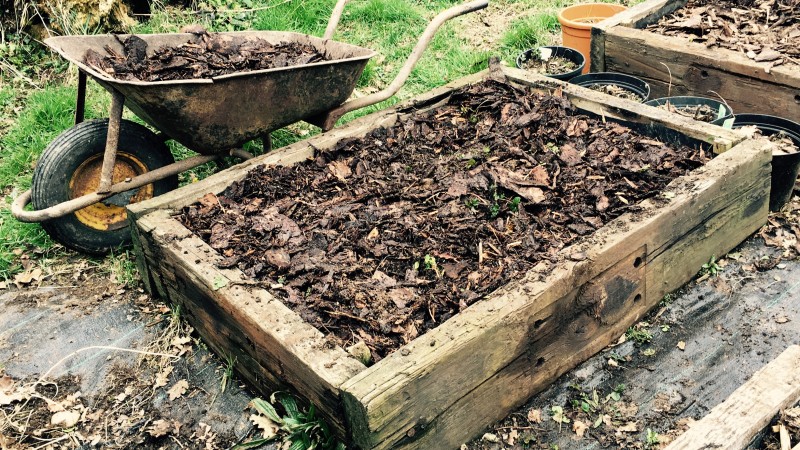
My very cracked raised beds but you get the idea
As the raised beds are quite visible, it would be nice to make them out of split railway sleepers if you have a local supplier. The wood will also last longer if the inside is lined with black plastic.
Behind the raised beds on the eastern side, a thornless bramble scrambles up the hedge, and on the western side a fragrant Jasmine. Past the Jasmine is a native Elder, a fantastic wildlife plant, which responds well to pruning back in the winter (which may be necessary to keep the shade off the raised beds).
In the corner is a log pile, a simple but very effective wildlife feature, encouraging all manner of inverterbrates, which are a food source for birds and hedgehogs (Hedgehog Highway next door). Under the Elder are a couple of perennial kales, with a ground cover of Nepalese Raspberry.
In front of the western raised beds is some more sunshine, which is a good place for some perennial alliums like Garlic Chives and Welsh Onions. It’s a also a good spot for Day Lillies, edible and brightly cheerful flowers, repeated on the other side of the Wildflower Meadow.
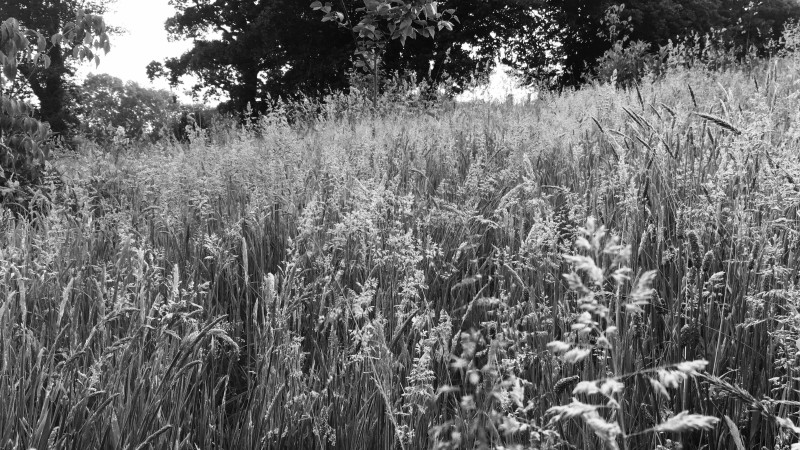 Black & white photo of grass meadow
The Wildflower Meadow is only a small patch of ground but it is an opportunity to create yet more varied habitat and some beautiful native flowers. There is lots of information about how to create a wildflower meadow; two suppliers I’ve found are British Wild Flower Plants and The Wildflower Nursery.
In the western Elder Bed, the focal point is the Aronia bush, a very productive fruit bush that copes well with part shade. Toward the house, there’s a gooseberry bush and the Caucasian Spinach on the obelisk plant support.
Moving across to the West Bed, there’s an 'Annie Elizabeth' cooker/eater apple, in the same pollinating group as the Golden Delicious, on a dwarfing rootstock. More fruit bushes in the form of blackcurrants, and a shade tolerant Gaultheria shallon, hosta and Shuttlecock Fern.
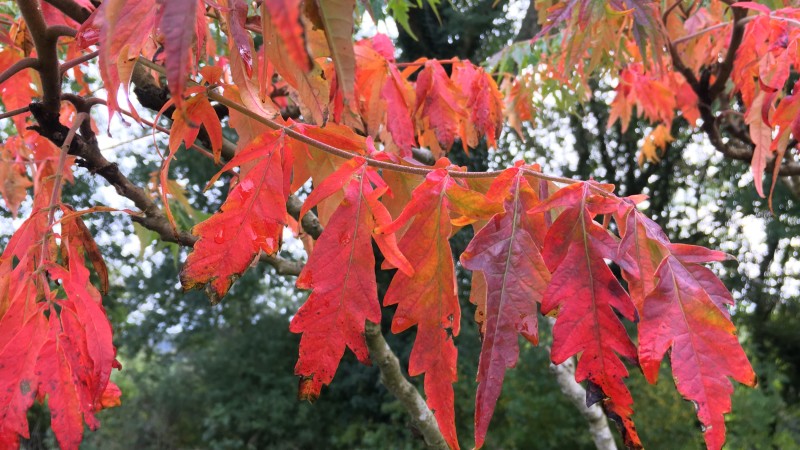
Stunning autumn display of Sumach
The hostas and Shuttlecock Fern are repeated in the Shade Bed, crowned with Solmon’s Seal. In the gap by the trimmed box hedge is a very ornamental and edible Sumach, a Rhus aromatica, which has beautiful autumn colour.
Features
- Productive, perennial veg
- Well drained paths
- Seating area to north of garden
- Space for annual veg (potatoes & carrots)
- Carrots by garage in big 130L planter
Wildlife features

Illustration of Hedgehog Highway
- Wildlife pond
- Open compost bins
- Hedgehog Highway
- Log piles
- Stone pile
- Wildflower meadow areas
- Thick hedges
3. Schedule of Works
- Buy Creating a Forest Garden
- Propagate ground cover
- Fell conifer
- Mark out paths
- Move plants
- Move circular stepping stones
- Remove & re-use paving
- Make raised beds
- Install arbour
- Build pond
- Create stone pile
- De-turf
- Plant trees
- Sow “meadow”
- Bark mulch
- Wood chip paths
- Plant big shrubs
- Plant ground cover plants
- Sow temporary ground cover
Books
- Creating a Forest Garden by Martin Crawford
- The Wild Garden by Violet Stevenson
- The Wildlife Pond Book by Jules Howard
- Wildlife gardening for Everyone and Everything by Kate Bradbury
- A New Garden Ethic by Benjamin Vogt
4. Maintenance
- Apple: prune in winter
- Pond: clear out excess duckweed in summer, leaves in winter
- Ivy: prune ivy hedge in spring, to give room to Jasmine and Blackberry
This page online: http://simp.ly/p/gTpjxh